Recently, it has dominated headlines due to its ability to produce responses that far outperform what was previously commercially possible. Although natural language processing might sound like something out of a science fiction novel, the truth is that people already interact with countless NLP-powered devices and services every day. Some of the most common ways NLP is used are through voice-activated digital assistants on smartphones, email-scanning programs used to identify spam, and translation apps that decipher foreign languages. Natural language processing ensures that AI can understand the natural human languages we speak everyday. Though natural language processing tasks are closely intertwined, they can be subdivided into categories for convenience.
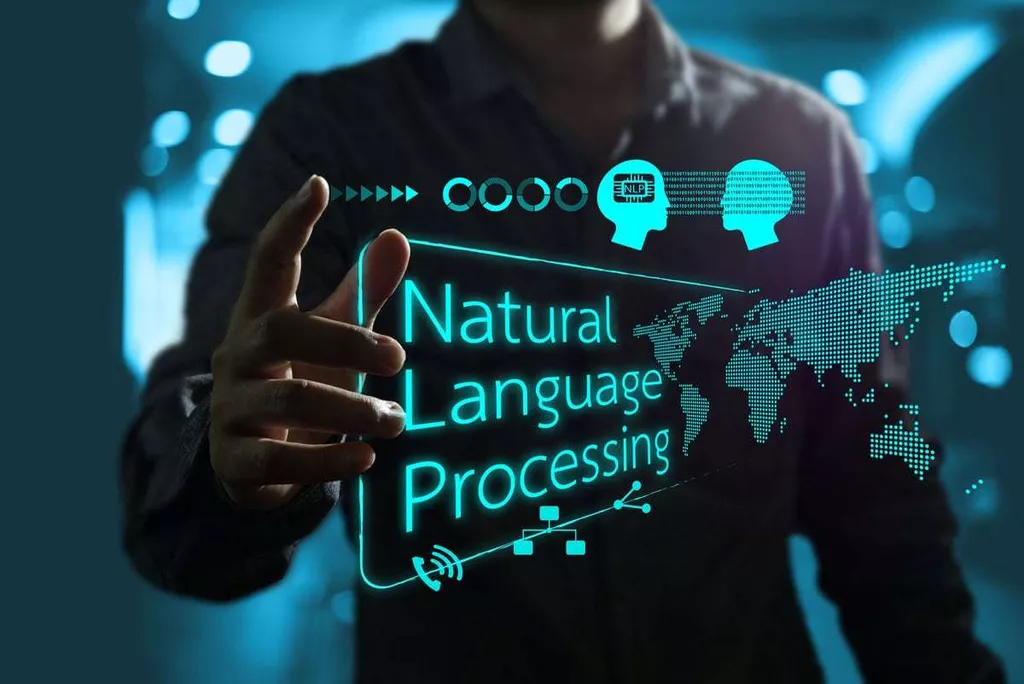
But NLP also plays a growing role in enterprise solutions that help streamline business operations, increase employee productivity, and simplify mission-critical business processes. A chatbot is an artificial intelligence (AI) software that can simulate a conversation with a user in natural language. It’s an advanced implementation of natural language processing, taking us closer to communicating with computers in a way similar to human-to-human conversations. Other interesting applications of NLP revolve around customer service automation. This concept uses AI-based technology to eliminate or reduce routine manual tasks in customer support, saving agents valuable time, and making processes more efficient. The next task is called the part-of-speech (POS) tagging or word-category disambiguation.
Begin incorporating new language-based AI tools for a variety of tasks to better understand their capabilities.
Chatbots can be extremely helpful for customer support, saving businesses time and money. Since the majority of questions raised by customers are asked frequently, they can be handled by chatbots. This helps customer service agents prioritize important customer queries, thereby ensuring overall customer satisfaction. In this guide, you’ll learn about the basics of Natural Language Processing and some of its challenges, and discover the most popular NLP applications in business. Finally, you’ll see for yourself just how easy it is to get started with code-free natural language processing tools.
- This is the technology behind some of the most exciting NLP technology in use right now.
- Natural language processing (NLP) is critical to fully and efficiently analyze text and speech data.
- Now that you’ve gained some insight into the basics of NLP and its current applications in business, you may be wondering how to put NLP into practice.
- There’s a chance we may be able to have a full-fledged sophisticated conversation with a robot in the future.
- The output or result in text format statistically determines the words and sentences that were most likely said.
- Google Translate is perhaps the most popular and efficient translator available.
Infuse powerful natural language AI into commercial applications with a containerized library designed to empower IBM partners with greater flexibility. There are hundreds of languages in the world that make communication a complex phenomenon. Autocomplete is another useful application of NLP that is used by almost every web / mobile application, including search engines like Google. Not everyone can produce a perfect sentence without any spellings or grammar errors.
Natural language processing for government efficiency
PoS tagging is useful for identifying relationships between words and, therefore, understand the meaning of sentences. Unspecific and overly general data will limit NLP’s ability to accurately understand and convey the natural language processing in action meaning of text. For specific domains, more data would be required to make substantive claims than most NLP systems have available. Especially for industries that rely on up to date, highly specific information.

This example is useful to see how the lemmatization changes the sentence using its base form (e.g., the word «feet»» was changed to «foot»). In industries like healthcare, NLP could extract information from patient files to fill out forms and identify health issues. These types of privacy concerns, data security issues, and potential bias make NLP difficult to implement in sensitive fields. NLP attempts to make computers intelligent by making humans believe they are interacting with another human. The Turing test, proposed by Alan Turing in 1950, states that a computer can be fully intelligent if it can think and make a conversation like a human without the human knowing that they are actually conversing with a machine. At this stage, the computer programming language is converted into an audible or textual format for the user.
Related products and services
This can be a good first step that your existing machine learning engineers — or even talented data scientists — can manage. For customers that lack ML skills, need faster time to market, or want to add intelligence to an existing process or an https://www.globalcloudteam.com/ application, AWS offers a range of ML-based language services. These allow companies to easily add intelligence to their AI applications through pre-trained APIs for speech, transcription, translation, text analysis, and chatbot functionality.
These findings help provide health resources and emotional support for patients and caregivers. Learn more about how analytics is improving the quality of life for those living with pulmonary disease. While natural language processing isn’t a new science, the technology is rapidly advancing thanks to an increased interest in human-to-machine communications, plus an availability of big data, powerful computing and enhanced algorithms. The proposed test includes a task that involves the automated interpretation and generation of natural language. The earliest NLP applications were hand-coded, rules-based systems that could perform certain NLP tasks, but couldn’t easily scale to accommodate a seemingly endless stream of exceptions or the increasing volumes of text and voice data.
What is natural language processing used for?
You can even customize lists of stopwords to include words that you want to ignore. Observability, security, and search solutions — powered by the Elasticsearch Platform. If you’re interested in learning more about NLP, there are a lot of fantastic resources on the Towards Data Science blog or the Standford National Langauge Processing Group that you can check out. NLP uses are currently being developed and deployed in fields such as news media, medical technology, workplace management, and finance. There’s a chance we may be able to have a full-fledged sophisticated conversation with a robot in the future.

However, transfer learning enables a trained deep neural network to be further trained to achieve a new task with much less training data and compute effort. It consists simply of first training the model on a large generic dataset (for example, Wikipedia) and then further training (“fine-tuning”) the model on a much smaller task-specific dataset that is labeled with the actual target task. Perhaps surprisingly, the fine-tuning datasets can be extremely small, maybe containing only hundreds or even tens of training examples, and fine-tuning training only requires minutes on a single CPU.
Natural Language Processing (NLP): What it Means, How it Works
Natural Language Generation (NLG) is a subfield of NLP designed to build computer systems or applications that can automatically produce all kinds of texts in natural language by using a semantic representation as input. Some of the applications of NLG are question answering and text summarization. As customers crave fast, personalized, and around-the-clock support experiences, chatbots have become the heroes of customer service strategies. When we speak or write, we tend to use inflected forms of a word (words in their different grammatical forms). To make these words easier for computers to understand, NLP uses lemmatization and stemming to transform them back to their root form.
What is Natural Language Processing? Definition and Examples
Some are centered directly on the models and their outputs, others on second-order concerns, such as who has access to these systems, and how training them impacts the natural world. In general terms, NLP tasks break down language into shorter, elemental pieces, try to understand relationships between the pieces and explore how the pieces work together to create meaning. How are organizations around the world using artificial intelligence and NLP? Indeed, programmers used punch cards to communicate with the first computers 70 years ago. This manual and arduous process was understood by a relatively small number of people.
Top Natural Language Processing (NLP) Techniques
A machine-learning algorithm reads this dataset and produces a model which takes sentences as input and returns their sentiments. This kind of model, which takes sentences or documents as inputs and returns a label for that input, is called a document classification model. Document classifiers can also be used to classify documents by the topics they mention (for example, as sports, finance, politics, etc.). NLP combines AI with computational linguistics and computer science to process human or natural languages and speech. The first task of NLP is to understand the natural language received by the computer.


